
Your Firm Holds the Most Sensitive Data in Business. Your Security Was Designed by an IT Generalist.
Law firms are the #1 target for sophisticated cyberattacks because you hold M&A intelligence, patent filings, litigation strategy, and personal financial data. ABA Rule 1.6 demands "reasonable efforts" to protect client information. The question is whether your current security meets that standard. From $10K/month.











“I love it!”
GRANT CARDONE · 10X Rule · $4B+ Portfolio














Alastair Monte Carlo
21+ years of enterprise technology leadership with a Raytheon/DoD security background. Certified Ethical Hacker (CEH) and SCADA systems security trained. The same methodology that protects classified defense information, applied to protecting your firm's most sensitive client data. PhD defense consultant. Fortune 500 security architecture across Wells Fargo, Bank of America, Verizon, and AT&T.
“I love it!”
GRANT CARDONE · 10X Rule · $4B+ PortfolioDefense-Grade Process. Proven Results.
Every engagement follows a battle-tested methodology refined across Raytheon/DoD deployments and Fortune 500 security transformations. The same rigor applied to national security, deployed to protect your client data.

Security Architecture Assessment
Comprehensive audit of your current security landscape, identifying vulnerabilities, compliance gaps, and attack surface exposure across all systems.
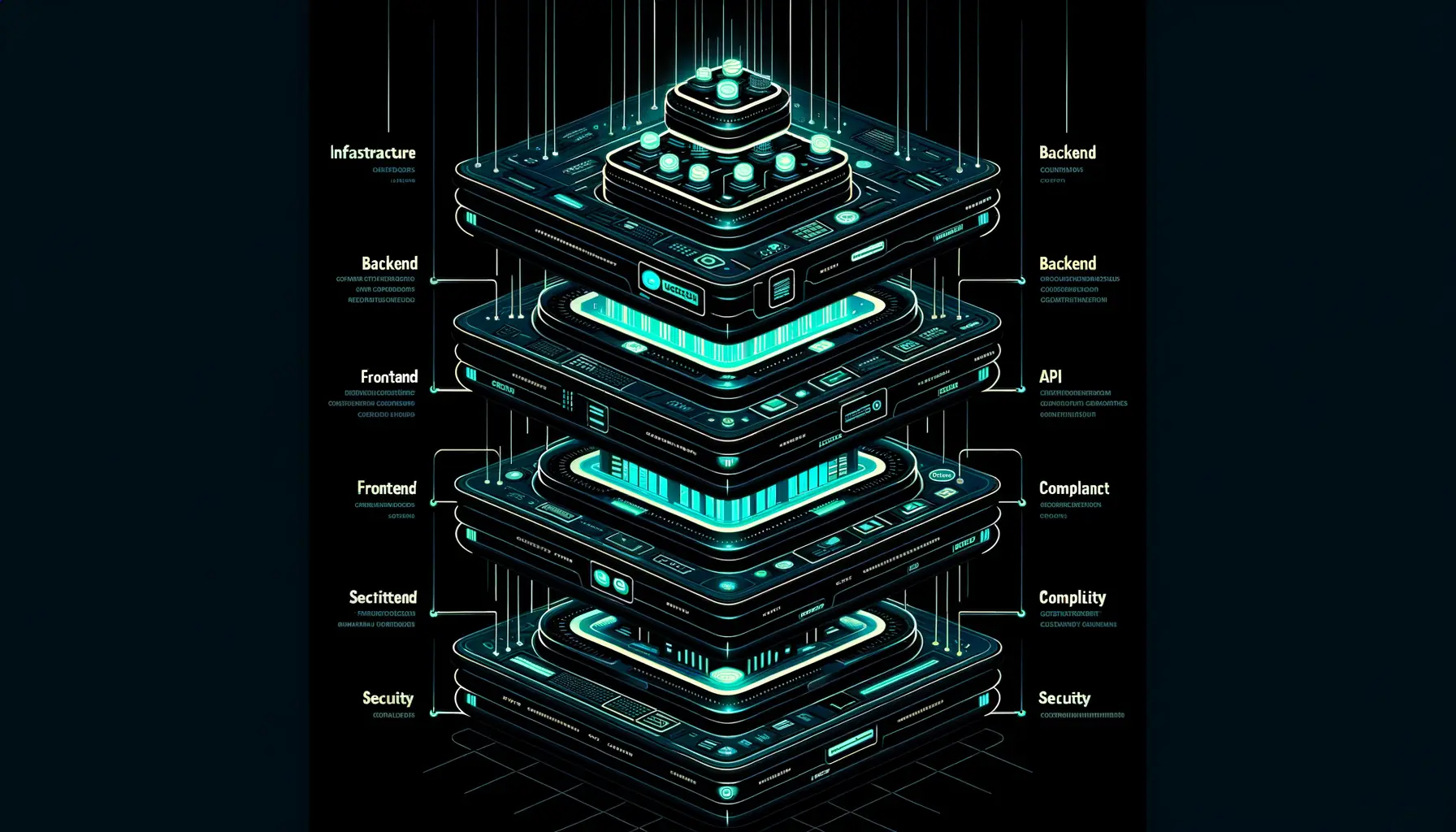
Zero-Trust Architecture
Network segmentation, micro-perimeter controls, continuous verification, and matter-level data isolation designed for the legal industry.

Incident Response Protocol
A structured 4-phase response framework: detection, containment, eradication, recovery. Battle-tested across enterprise environments.
A Single Data Breach Costs the Average Law Firm $3.7M. Proper Security Architecture Costs a Fraction of That.
Every tier includes Raytheon/DoD security methodology, ABA compliance documentation, and direct access to Alastair's 21+ years of enterprise cybersecurity experience. Limited to 3 active cybersecurity clients to ensure focused attention.
Security Essentials
- Security posture assessment
- Architecture design and roadmap
- Basic monitoring setup
- ABA compliance gap analysis
- Quarterly security reviews
- Email and phone support
First 30 days: Complete security audit, ABA compliance gap analysis, and a prioritized remediation roadmap. Know exactly where you are vulnerable and what to fix first.
Get StartedSecurity Professional
- Everything in Security Essentials
- Full zero-trust implementation
- Staff security training program
- 24/7 monitoring setup
- Incident response plan
- Client-facing security documentation
- ABA compliance certification package
First 30 days: Zero-trust architecture deployed, staff training launched, incident response plan delivered. This tier delivers the fastest path from vulnerable to fortified.
Lock In Your SpotSecurity Elite
- Everything in Security Professional
- Am Law 200 multi-office coverage
- CISO-level oversight
- Board and partner reporting
- Vendor security assessment
- Penetration testing coordination
- Cyber insurance liaison
First 30 days: CISO-level security strategy presented to partners, multi-office security architecture designed, and board-ready reporting framework established.
Claim Your SpotSecurity Sprint
30-day intensive security assessment and remediation. Comprehensive audit, critical vulnerability remediation, incident response plan, and ABA compliance documentation. Ideal for firms facing an imminent client security audit or a malpractice carrier questionnaire.
Request Sprint AssessmentZero-risk engagement. If you do not see measurable security improvements in the first 30 days, we part ways. No contracts. No lock-in. Your firm keeps every deliverable, every audit document, every architecture design.
"The right of the people to be secure in their persons, houses, papers, and effects, against unreasonable searches and seizures, shall not be violated."Fourth Amendment, U.S. Constitution
Questions Law Firms Ask About Cybersecurity
How is this different from a managed security service provider (MSSP)?
An MSSP monitors alerts and manages your firewall. They are reactive by design. A CTO-level cybersecurity architect designs the entire security posture from the ground up: zero-trust architecture, access controls, encryption strategy, incident response, staff training, and ABA compliance documentation. We work alongside your MSSP or replace the need for one entirely. The difference is strategy versus surveillance. An MSSP watches for fires. We make your building fireproof.
Can you work with our existing IT team?
Absolutely. Your IT team handles day-to-day operations: password resets, printer issues, email management. We provide the strategic security architecture, ABA compliance frameworks, and implementation roadmaps that your IT team executes. Most law firm IT departments are excellent at keeping systems running but lack the specialized cybersecurity architecture expertise required for zero-trust implementation and ABA compliance certification. We fill that gap without replacing your team.
What specific ABA compliance requirements do you address?
We address ABA Model Rule 1.6 (Confidentiality of Information), ABA Formal Opinion 477R (securing client communications), ABA Formal Opinion 483 (obligations after a data breach), and the ABA Cybersecurity Handbook requirements. Our deliverables include a compliance gap analysis, a remediation plan, and a certification package that documents your firm's "reasonable efforts" to protect client information. This documentation is critical for ethics inquiries, client audits, RFP responses, and regulatory investigations.
Will this help reduce our cyber insurance premiums?
Yes. Cyber insurance underwriters evaluate your security posture during the application and renewal process. A documented zero-trust architecture, an incident response plan, a staff training program, and an ABA compliance certification package directly demonstrate reduced risk to underwriters. Our clients typically see 15-30% premium reductions at their next renewal cycle. We also prepare the technical documentation that insurers request during underwriting, saving your team hours of work.
Do you provide client-facing security documentation for RFPs?
Yes. Increasingly, corporate clients require law firms to pass security audits before awarding engagements. We create professional, client-facing security documentation that details your firm's encryption standards, access controls, data handling procedures, incident response capabilities, and compliance certifications. This documentation has directly helped our clients win competitive engagements where security posture was the deciding factor between otherwise equal firms.
A corporate client just required us to pass a SOC 2 audit before awarding work. How fast can you help?
This is happening to more firms every quarter. Corporate clients, particularly in finance, healthcare, and tech, now require law firms to demonstrate security compliance before sharing confidential deal information. We have taken firms from zero to SOC 2 Type I certification in 90 days. Type II takes 12 months of continuous monitoring. We start with a gap analysis against SOC 2 Trust Service Criteria, remediate the top 10 findings (usually access control, encryption, and vendor management), and prepare the audit documentation. Your firm wins the work while competitors are still figuring out what SOC 2 means.
We just received a cyber insurance renewal with a 40% premium increase. Can you help?
Yes, and this is a negotiation leverage point. Insurance carriers increase premiums when they cannot verify security controls. We implement the 12 controls that carriers specifically underwrite against: MFA everywhere, endpoint detection, email filtering, backup encryption, privileged access management, vulnerability scanning, patch management, incident response plan, security awareness training, network segmentation, logging/monitoring, and third-party risk management. We then produce a security posture report in the format carriers require. Our clients have reduced premiums by 15-30% at the next renewal, and two firms negotiated retroactive premium credits.
What are the actual bar discipline consequences of a data breach?
ABA Formal Opinion 483 (2018) requires prompt notification to clients when a breach may have compromised confidential information. Multiple state bars have disciplined attorneys for failing to implement reasonable security measures, referencing ABA Model Rule 1.6(c). In 2023, a mid-size firm in Texas faced bar complaints from 47 clients after a ransomware attack exposed privileged communications. The managing partner faced individual discipline. Beyond bar consequences: malpractice carriers are increasingly denying coverage for breaches where the firm failed to implement industry-standard security. The standard of care is rising every year. What was "reasonable" in 2020 is negligent today.
Ask Sterling Anything
Our AI executive assistant has answers about Alastair's cybersecurity methodology, ABA compliance approach, pricing, availability, and more. Go ahead, test him.
Attorney-Client Privilege Protection Guarantee
All engagements operate under mutual NDA. AES-256 encryption at rest and in transit. Zero-knowledge architecture for client data. Our defense partner holds Top Secret Security Clearance · the same protocols that protect classified defense intelligence now protect your client data.
Every Day Without Proper Security Is Another Day You Are Exposed. How Long Will You Wait?
30 minutes. No commitment. No pitch deck. A real conversation about your firm's security posture, ABA compliance gaps, and the specific threats targeting your practice areas. 2 cybersecurity retainer spots remaining this quarter.
If you do not see measurable value in the first 30 days, you pay nothing. We have never had a client invoke this guarantee.
2 spots left for Q3 2026 cybersecurity engagements
Secure Your Firm
Featured Interview
From Flash to IoT to Humanoid Robots
Read Alastair's interview with HackerNoon on the evolution of technology, the future of humanoid robotics, and building at the edge of what's possible.
Read the Interview on HackerNoon →